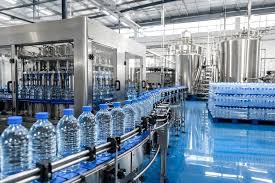
Starting a bottled water business can be a promising opportunity, but equipment planning plays a major role in long-term success. Many new investors focus first on bottle design, branding, or sales channels, but the real foundation of the business is the production system. Choosing the right machines affects output capacity, product quality, labor cost, maintenance needs, and future expansion.
Before investing, business owners should understand the core equipment used in bottled water production and how each part supports the overall process.
Water Treatment System
The first and most important part of bottled water production is water treatment. Raw water may come from groundwater, municipal water, spring water, or other approved sources. However, it must be treated before filling to meet safety and quality standards.
A water treatment system can include filtration, reverse osmosis, UV sterilization, ozone treatment, and storage tanks, depending on raw water quality and production standards.
For investors, this stage should not be treated as optional. Poor water treatment can lead to taste problems, microbial risks, unstable quality, and regulatory issues. A good system helps produce clean, safe, and consistent bottled water.
Bottle Blowing Machine
If the business uses PET bottles, a bottle blowing machine may be needed. This machine turns plastic preforms into finished bottles through heating and air pressure. Some small businesses buy ready-made bottles at the beginning, while larger factories often produce bottles in-house to reduce long-term costs.
Bottle blowing equipment is important because bottle quality affects appearance, strength, filling performance, and transportation safety. Investors should consider bottle size, shape, hourly output, mold cost, and compatibility with future production plans.
Bottle Rinsing, Filling, and Capping Equipment
The filling section is one of the most important parts of the factory. Bottles must be cleaned, filled accurately, and sealed properly. A monoblock filling machine integrates rinsing, filling, and capping in one unit, saving floor space and improving overall production efficiency.
When selecting filling equipment, investors should consider production speed, bottle size range, filling accuracy, hygiene design, capping stability, and ease of operation. A machine that is too small may limit growth, while an oversized system may increase unnecessary investment pressure.
Cap Sorting and Feeding System
Caps must be delivered to the capping unit smoothly and correctly. A cap sorting and feeding system helps organize caps and send them into the machine in the right direction. Although it may seem like a small part of the process, poor cap feeding can cause downtime, leakage, and unstable sealing quality.
Business owners should choose cap systems that match their bottle neck design and cap type. Reliable cap handling supports stable production and reduces manual intervention.
Labeling Machine
Labels support branding, product details, and shelf presentation. Labeling machines apply labels precisely, with options like shrink sleeves, adhesive labels, and hot melt labeling.
The right choice depends on brand positioning, bottle shape, label material, and production speed. For a business-focused investment plan, labeling should be considered both a packaging cost and a marketing tool. A well-labeled bottle looks more professional and can improve customer trust.
Date Coding Machine
Most bottled water products need production dates, batch numbers, or expiration dates printed on the bottle, cap, or label. A date coding machine helps meet traceability and compliance requirements.
Common coding technologies include inkjet printing and laser marking. Investors should consider printing clarity, ink cost, maintenance needs, and whether the system can work continuously at the required production speed.
Shrink Wrapping or Carton Packing Machine
After filling and labeling, bottles need to be packed for storage and delivery. Some businesses use shrink film packaging, while others use cartons or trays. The choice depends on market requirements, transportation distance, retail format, and cost.
A good packing system protects bottles, improves handling efficiency, and supports warehouse management. For growing businesses, semi-automatic or automatic packing equipment can reduce labor pressure and improve shipment consistency.
Conveyors and Production Layout
Conveyors connect different machines and keep bottles moving through the production process. A poor layout can cause bottlenecks, bottle jams, wasted space, and inefficient labor use.
Before purchasing equipment, investors should plan the full factory layout, including water treatment area, filling area, packaging area, storage area, operator access, drainage, electricity, and maintenance space. A well-designed water bottling line is not just a group of machines; it is a coordinated system built around capacity, hygiene, workflow, and future expansion.
Air Compressor and Supporting Utilities
Many machines require compressed air, stable electricity, clean water, drainage, and sometimes cooling systems. Supporting utilities are often underestimated during investment planning.
An air compressor, air dryer, power supply system, and spare parts plan should be included in the budget. Without reliable utilities, even high-quality equipment may not perform well.
Conclusion
Investing in bottled water production is not only about buying machines. It is about building a complete, efficient, and reliable production system. Business owners should understand water treatment, bottle production, filling, capping, labeling, coding, packing, conveyors, and utility support before making decisions.
The best equipment plan should match current production needs while leaving room for future growth. By understanding each key machine and its business impact, investors can reduce risk, control costs, and build a stronger foundation for long-term bottled water success.