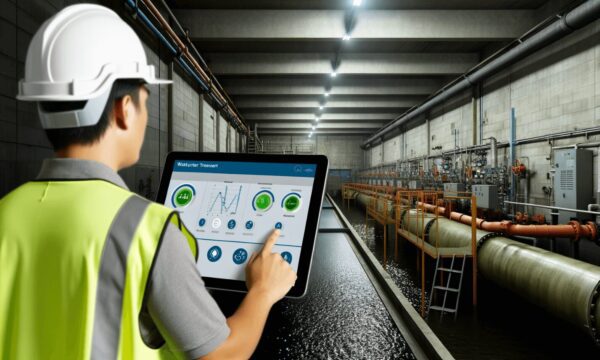
Investing in advanced physical infrastructure, such as a state-of-the-art water recycling system, is a massive step forward for any industrial facility, commercial building, or municipal operation. It signals a commitment to sustainability, regulatory compliance, and long-term cost reduction. However, a critical oversight many organizations make is upgrading their physical hardware without upgrading their operational software. Managing complex water reclamation processes requires constant monitoring, meticulous compliance reporting, and rapid response to maintenance alerts. To maximize the ROI of your new physical assets, modern businesses are turning to a digital workforce to handle the heavy lifting of data and administration.
By integrating intelligent, autonomous AI agents into your daily operations, you bridge the gap between advanced industrial hardware and seamless facility management. In this comprehensive guide, we will explore how AI is transforming industrial oversight, the rise of digital teammates, and how an AI-driven operational strategy is the perfect companion to your water recycling investments.
Beyond the Hardware: Defining the Digital Workforce
For decades, the answer to scaling operations or managing new industrial equipment was simply to hire more staff. Today, the complexity of modern systems demands a more agile approach.
The Evolution of Digital Teammates
It is essential to distinguish between basic automation and true digital teammates. Traditional automation relies on rigid, rule-based scripts—if “X” happens, then do “Y.” But industrial environments, especially those involving fluid dynamics and chemical treatments, are rarely that predictable.
A modern digital teammate is powered by advanced Large Language Models (LLMs) and cognitive AI. These entities can read unstructured data, interpret context, and make autonomous decisions based on the standard operating procedures (SOPs) you provide. They don’t just flag an error code on a water pump; they analyze the code, cross-reference it with the equipment manual, draft a work order, and notify the appropriate maintenance technician—all within seconds.
Why Modern Infrastructure Demands Digital Workforce Solutions
The implementation of a water recycling system introduces a new layer of data to your facility: IoT sensors tracking Total Dissolved Solids (TDS), flow rates, pressure differentials, and chemical dosing. Human operators can easily suffer from “alert fatigue” when bombarded with this continuous stream of data. Digital workforce solutions act as the ultimate filter and processor. By ingesting this data in real-time, these AI agents ensure that human workers are only interrupted when absolute critical thinking or physical intervention is required.
Advanced water recycling systems combined with an AI-driven digital workforce represent the pinnacle of modern, sustainable facility management.
Empowering Leadership: The AI Executive Assistant
Facility managers, sustainability directors, and plant operators are often bogged down by administrative tasks that detract from strategic planning. Enter the AI executive assistant—a specialized digital worker designed to support leadership in high-stakes environments.
Automating Compliance and Reporting
Water recycling systems are heavily regulated. Depending on your municipality, you must frequently submit reports proving that your effluent meets specific environmental standards before partial discharge, or that your closed-loop system is operating safely. An AI executive assistant can be trained to automatically pull daily water quality data from your system’s dashboard, format it into the required local compliance templates, and route it to your desk for a final signature. This eliminates hours of manual data entry and drastically reduces the risk of human error leading to costly compliance fines.
Vendor and Maintenance Coordination
An industrial water treatment system requires regular deliveries of treatment chemicals, replacement of reverse osmosis (RO) membranes, and routine inspections. Your AI executive assistant can monitor inventory levels and automatically draft purchase orders to your vendors when supplies run low. Furthermore, it can manage the complex calendar of your physical maintenance team, seamlessly scheduling downtime for system backwashing or filter replacements during off-peak hours to ensure zero disruption to your core business operations.
How Digital Teammates Optimize Water Recycling Systems
The synergy between artificial intelligence and water reclamation technology is where true operational magic happens. You aren’t just buying software; you are integrating a brain into your water infrastructure.
Real-Time Data Ingestion and IoT Integration
Modern water recycling units are equipped with the Internet of Things (IoT). Sensors constantly measure pH levels, turbidity, and microbial loads. Digital teammates can be integrated directly via API to these dashboards. Instead of a human operator staring at a screen waiting for a pressure drop to indicate a fouled membrane, the digital worker monitors the system 24/7. If a spike in contaminants is detected, the AI can instantly recommend process adjustments—such as altering the chemical feed rate—or immediately alert the shift supervisor with a summary of the anomaly.
Predictive Maintenance and Anomaly Detection
Perhaps the highest-value application of digital workforce solutions in this context is predictive maintenance. Water recycling systems are prone to scaling and biological fouling if not perfectly balanced. An AI agent analyzes historical performance data alongside current sensor readings to predict failures before they occur. For example, if it notices a gradual, 5% decrease in flow rate over three weeks, it can predict exactly when a pump will fail or a filter will completely clog. It then proactively creates a maintenance ticket. This shift from reactive repairs to predictive maintenance saves tens of thousands of dollars in emergency repair costs and prevents catastrophic system downtime.
The Strategic Advantages of Digital Workforce Solutions
Adopting an AI-driven workforce to manage your facility’s infrastructure is not merely a technological upgrade; it is a fundamental shift in how industrial businesses scale and compete.
Infinite Scalability and 24/7 Monitoring
Water does not sleep, and neither do industrial manufacturing plants or commercial buildings. However, staffing a facility with expert human analysts 24 hours a day is prohibitively expensive. A digital workforce provides infinite scalability and relentless vigilance. Whether your recycling system is processing 1,000 gallons a day or scaling up to 100,000 gallons during peak seasonal production, your AI agents handle the increased data load effortlessly without requiring a single hour of overtime pay.
Cost Reduction and Error Mitigation
The financial benefits of combining water recycling with an AI workforce are twofold. First, the physical recycling system slashes your municipal water and sewer bills. Second, the digital workforce slashes your administrative overhead. By automating data entry, compliance tracking, and vendor coordination, you free up your highly paid engineers and facility managers to focus on strategic initiatives—like optimizing energy use or expanding production—rather than chasing paperwork. Furthermore, AI does not make transcription errors, ensuring that your regulatory reporting is flawless.
Conclusion
The decision to install a water recycling system is a monumental step toward sustainable, cost-effective operations. However, the hardware alone is only half the equation. To truly unlock the potential of your physical infrastructure, you must support it with an equally sophisticated operational framework.
By deploying digital workforce solutions, you transform a complex web of sensors, pumps, and compliance requirements into a streamlined, self-monitoring ecosystem. Your digital teammates act as the tireless nervous system of your facility, while your AI executive assistant empowers your leadership team to focus on strategy rather than administration.
The future of industrial efficiency isn’t just about saving water; it’s about saving time, reducing cognitive load, and operating with unprecedented precision.