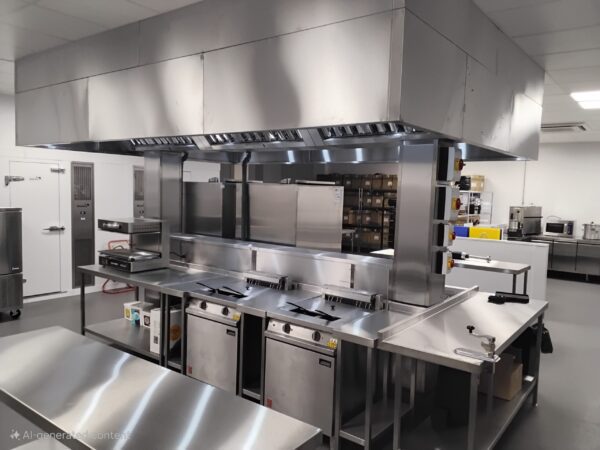
A grease fire can double in size every minute. Commercial kitchen fires account for roughly 22% of all restaurant fires in the United States, and the majority start in the cooking equipment or exhaust system. If your hood suppression system is out of compliance when one of those fires starts, the consequences go beyond property damage: your insurance claim could be denied, your operating licence put at risk, and your staff left without the protection they’re counting on.
The good news is that NFPA 96 is detailed enough that if you know what it requires, you can prepare for inspections confidently. Here is what fire protection inspectors actually look for when they walk into a Wyoming commercial kitchen.
What NFPA 96 Actually Covers
NFPA 96, the Standard for Ventilation Control and Fire Protection of Commercial Cooking Operations, is the national baseline for commercial kitchen fire safety. It covers everything from hood geometry and airflow to grease trap maintenance, fire suppression systems, and automatic gas shut-off devices.
In Wyoming, local Authorities Having Jurisdiction (AHJ), such as Casper Fire-EMS, adopt and enforce NFPA 96 as part of their fire code. That means the standard is not advisory. It is legally enforceable, and inspectors have the authority to shut down a non-compliant kitchen until deficiencies are corrected.
The inspection cycle that trips up most restaurant owners is the semi-annual requirement. NFPA 96 mandates that kitchen hood suppression systems be inspected at least every six months, not annually. High-volume cooking operations, particularly those using solid fuels or woks, may require quarterly inspections.
One critical thing many operators do not realise: cleaning your hood is not the same as inspecting it. These are two separate compliance obligations.
The Five Things Inspectors Focus On Most
A trained inspector running through NFPA 96 does not just glance at your system and sign off. They are working through a mental checklist developed from years of code knowledge and real-world incidents. The areas that generate the most violations tend to cluster around five categories.
1. Grease Accumulation in the Exhaust System
This is the number one deficiency found in commercial kitchen inspections. Grease build-up in the hood plenum, filters, ductwork, and exhaust fan creates a direct fuel source that suppression agents may not fully reach.
NFPA 96 Section 11.4 specifies cleaning frequencies based on cooking volume and type:
- Monthly: Solid fuel cooking, high-volume operations
- Quarterly: Moderate-volume charbroiling or wok cooking
- Every 6 months: Pizza ovens, pastry operations, low-volume cooking
- Annually: Seasonal or very-low-volume cooking
Inspectors will open access panels, check baffle filters for grease drip, and sometimes use a scraper test on ductwork surfaces. They are looking for accumulated grease depth beyond a fraction of an inch. If your cleaning vendor is not leaving a dated service sticker on the hood, that alone is a red flag.
2. Suppression System Status and Nozzle Placement
The suppression system, most commonly an Ansul R-102 or similar UL 300-listed wet chemical system, must be in serviceable condition with nozzles correctly aimed at each protected cooking appliance.
Inspectors check:
- Nozzle positioning relative to appliance type (fryers, griddles, charbroilers each have specific requirements)
- Nozzle caps (blown-off or missing caps allow grease to clog the orifice)
- Cylinder pressure gauge reading (must be in the operable range)
- Fusible link condition and age (typically replaced annually)
- Manual pull station accessibility (cannot be obstructed)
A common compliance failure is a kitchen that has added or rearranged cooking equipment since the last inspection without updating the suppression system design. If a new deep fryer sits outside the nozzle’s protective zone, the system is effectively non-compliant even if everything else looks fine.
3. Automatic Gas and Electric Shut-Off Devices
NFPA 96 requires that upon suppression system activation, the gas supply and any electric heating elements under the hood must shut off automatically. This is achieved through mechanical or electric interlock devices tied to the suppression system’s actuation mechanism.
Inspectors will physically test the interlock. If the gas does not cut when the system trips, that is a critical violation. These devices degrade over time and require testing at every inspection cycle.
4. Hood and Duct Construction, Clearances, and Filters
The physical structure of the hood matters. NFPA 96 specifies minimum overhang distances so that the hood fully captures grease-laden cooking vapours. Filters must be listed, properly installed, and free of damage.
Common issues found during inspection:
- Filters installed incorrectly (wrong angle or leaving gaps at the edges)
- Damaged filter frames that allow unfiltered air to bypass the grease tray
- Insufficient hood-to-appliance overhang after kitchen reconfigurations
- Grease drip trays not positioned or draining correctly
The team at Crimson Fire Protection works with commercial kitchen operators throughout Wyoming on exactly these types of pre-inspection assessments, helping them identify structural or equipment issues before an AHJ visit turns them into violations.
5. Documentation and Inspection Records
An inspector does not just look at the physical equipment. They ask to see your records. NFPA 96 requires that documentation of inspections, cleanings, and service work be maintained on-site.
What they want to see:
- Current suppression system inspection report (dated, signed by a certified technician)
- Hood cleaning certificates with before-and-after photos
- Records of any system repairs or component replacements
- Proof that the previous deficiencies have been corrected
Missing or incomplete records are surprisingly common, particularly in businesses that have changed ownership. Even if the physical system is perfectly maintained, no documentation means no proof of compliance.
How Wyoming’s Climate and Kitchen Conditions Add Complexity
Wyoming’s high-altitude environment, particularly in Casper and communities at elevation, can affect system performance in ways that do not apply in coastal states. Lower air density influences hood capture velocity calculations, and harsh winters affect building ventilation dynamics.
Additionally, many Wyoming restaurants and catering operations run seasonal menus that shift cooking load significantly across the year. A kitchen that qualifies for annual cleaning in winter may need quarterly service during a high-volume summer season. Inspectors familiar with the region understand this, and a system calibrated for average usage rather than peak usage may not meet the actual cleaning frequency requirement.
What Happens When a Kitchen Fails Inspection
A failed inspection is not always catastrophic, but it is never convenient. Inspectors issue a deficiency notice with a compliance deadline. Serious violations, particularly anything related to suppression system readiness, can result in an order to stop cooking operations until the issue is resolved.
Insurance implications are significant. Most commercial property policies require that fire suppression systems be maintained in compliance with NFPA 96. A fire occurring in a kitchen with documented compliance failures can result in claim denial. That risk alone justifies treating semi-annual inspections as non-negotiable.
Preparing Your Kitchen Before the Inspector Arrives
You do not need to wait for an inspection to find out where your vulnerabilities are. A proactive walk-through using the NFPA 96 checklist framework can identify most issues in advance.
Practical pre-inspection steps:
- Confirm your suppression system’s last service date and schedule a service call if it is approaching six months
- Verify that nozzle placement still matches your current equipment layout
- Check that all manual pull stations are accessible and clearly labelled
- Review your cleaning log and confirm the frequency matches your cooking type
- Locate your inspection records and make sure they are on-site, not just in someone’s email inbox
For kitchens that have recently renovated, added equipment, or changed operators, a full system review by a qualified technician is worth the time before the inspector shows up unannounced.
If you are unsure where to start, the kitchen fire suppression service provided by licensed Wyoming technicians covers inspection, system testing, nozzle verification, and same-day compliance documentation, which is exactly the kind of resource that takes the guesswork out of pre-inspection preparation.
Key Takeaways
- NFPA 96 mandates semi-annual inspections for most commercial kitchens, not annual ones. High-volume operations may need quarterly service.
- Grease accumulation and incorrect nozzle placement are the two most common causes of inspection failure.
- Gas and electric shut-off interlocks must be physically tested at every inspection cycle.
- Documentation is part of compliance. Missing records can be treated as a violation even when physical systems are in good condition.
- Wyoming-specific factors, including elevation and seasonal cooking shifts, can affect both cleaning frequency requirements and system performance.
Frequently Asked Questions
How often does a commercial kitchen in Wyoming need a hood suppression inspection?
NFPA 96 requires inspections at least every six months for most commercial kitchens. Operations that use solid fuels or run high cooking volumes may need quarterly inspections. Your technician should assess your specific cooking load and recommend the appropriate frequency, not just default to the minimum.
Does my hood cleaning company also count as my fire suppression inspector?
Not necessarily. Hood cleaning and fire suppression inspection are separate services. A cleaning company removes grease from the hood and ductwork, but they are generally not licensed to inspect, test, or service the fire suppression system itself. You need a certified fire protection technician for the suppression side.
What documentation should I keep on-site for NFPA 96 compliance?
You should maintain dated inspection reports for the suppression system, signed cleaning certificates with photographic evidence, records of any repairs or component replacements, and any deficiency notices with proof of correction. These should be physically available in the kitchen, not just stored digitally offsite.
Can I fail a health inspection because of fire suppression deficiencies?
In Wyoming, health inspectors and fire inspectors operate through different agencies, but a health department inspector who notices an out-of-compliance or tagged suppression system may flag it or require you to produce current certification before passing the kitchen. The two inspection processes are separate but not entirely independent.
What is a UL 300-listed suppression system and why does it matter?
UL 300 is the Underwriters Laboratories standard for commercial cooking suppression systems. It sets performance benchmarks for the wet chemical agents used to suppress grease fires on modern high-efficiency cooking equipment. NFPA 96 requires UL 300-listed systems, and older Halon or dry chemical systems no longer meet this standard. If your system is pre-1994 vintage, it is almost certainly due for replacement.
Conclusion
Hood inspections are not something to get through once and forget. They exist because commercial kitchen fires are serious, predictable, and largely preventable. The businesses that handle them best are the ones that treat compliance as a baseline operating standard rather than a box to tick when an inspector calls.
Knowing what inspectors look for removes the anxiety and puts you in control. Get your records organised, verify your system layout matches your current equipment, and book your next inspection before the six-month window closes rather than after it does.