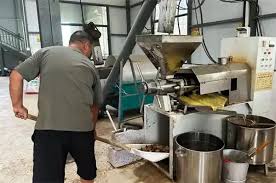
Starting a palm oil mill can be a profitable business opportunity, especially in regions where oil palm fruit is widely available and demand for edible oil, industrial oil, and by-products remains strong. However, palm oil milling is not a simple investment. It involves raw material supply, equipment selection, site planning, production capacity, labor, utilities, maintenance, and market development.
Before starting a palm oil mill project, business owners should understand the key factors that affect cost, efficiency, and long-term profitability.
1. Understand Your Raw Material Supply
The first question is not about machines, but about fresh fruit bunches, also known as FFB. A palm oil mill depends heavily on stable and fresh raw materials. If the supply of FFB is not reliable, even a well-designed mill may operate below capacity.
Business owners should evaluate:
- How many tons of FFB are available daily?
- Are the fruits from your own plantation or local farmers?
- How far is the plantation from the mill site?
- Can fruits be processed quickly after harvesting?
Freshness is very important because palm fruits begin to lose quality after harvesting. Long transportation time or poor storage may increase free fatty acid content and reduce crude palm oil quality. For this reason, many palm oil mills are built close to plantations or collection centers.
2. Choose the Right Production Capacity
Production capacity directly affects investment cost and business planning. A small mill may be suitable for local farmers or startup investors, while a larger mill may be better for plantation owners or industrial processors.
Common capacity options may range from small-scale processing lines to medium and large industrial mills. Business owners should not choose capacity based only on future ambition. They should calculate realistic daily FFB supply, working hours, labor availability, market demand, and budget.
If the mill is too small, it may not meet future growth needs. If it is too large, the machines may remain underused, increasing operating costs and reducing return on investment.
3. Know the Main Processing Steps
A palm oil mill usually includes several key processing stages. These may include fruit reception, sterilization, threshing, digesting, pressing, clarification, oil drying, fiber and nut separation, and oil storage.
Each step affects oil yield and final product quality. For example, sterilization helps soften the fruits and reduce enzyme activity. Threshing separates fruits from bunches. Pressing extracts crude palm oil from the digested fruit mash. Clarification removes water, sludge, and impurities from the oil.
Understanding the process helps investors choose suitable palm oil equipment and communicate more clearly with suppliers.
4. Estimate Total Investment Cost
Many new investors only focus on machine price, but the total investment is much broader. A palm oil mill project may include land, factory buildings, civil construction, boilers, power systems, water supply, storage tanks, wastewater treatment, installation, transportation, labor training, and spare parts.
Main cost areas include:
- Equipment purchase cost
- Factory construction cost
- Power and boiler system cost
- Installation and commissioning cost
- Labor and management cost
- Maintenance and spare parts cost
- Environmental treatment cost
Business owners should prepare a full budget before ordering machines. A low machine price may not mean a low total project cost if installation, energy consumption, or maintenance becomes expensive later.
5. Pay Attention to Oil Yield
Oil yield is one of the most important factors affecting profit. A higher extraction rate means more crude palm oil from the same amount of FFB. Oil yield depends on fruit quality, harvest timing, sterilization performance, pressing efficiency, and operator skill.
Poor equipment design or incorrect operation can leave too much oil in fiber, sludge, or wastewater. Over time, this loss can become a major financial problem. Investors should ask suppliers about expected oil recovery rate, process design, and quality control methods.
6. Consider Energy and Utility Requirements
Palm oil mills require steam, electricity, water, and fuel. The boiler is often used to provide steam for sterilization and processing. Some mills use fiber and shells as biomass fuel, which can reduce energy cost and improve resource utilization.
Before building the mill, business owners should check whether the site has enough water, stable electricity, and suitable drainage. In remote areas, power generation and water treatment systems may need to be included in the project plan.
7. Plan for By-Product Utilization
Palm oil milling produces more than crude palm oil. It also generates empty fruit bunches, palm kernel, fiber, shell, and wastewater. These by-products can create extra value if handled properly.
Palm kernels can be further processed into palm kernel oil. Fiber and shells can be used as boiler fuel. Empty fruit bunches may be used for composting, mulching, or biomass applications. Better by-product management helps reduce waste and improve overall profitability.
8. Environmental Compliance Matters
Palm oil processing creates wastewater and solid waste. Business owners must understand local environmental regulations before starting construction. Wastewater treatment, sludge handling, emission control, and odor management may all be required.
Ignoring environmental planning can lead to fines, delays, complaints, or forced shutdowns. A responsible mill design should include practical solutions for waste treatment and cleaner production.
9. Choose a Reliable Supplier
A palm oil mill is a long-term investment, so supplier selection is critical. Investors should look for a supplier that can provide process design, equipment manufacturing, installation support, operator training, spare parts, and after-sales service.
Vortech Global can support investors with palm oil processing solutions based on capacity, raw material conditions, factory layout, and production goals. A suitable supplier should not only sell machines, but also help business owners build a stable and efficient production system.
Conclusion
Palm oil mill investment can bring strong business value, but success depends on careful planning. Before starting, business owners should evaluate raw material supply, capacity, processing technology, total cost, oil yield, utilities, by-products, environmental requirements, and supplier support.
With the right planning and reliable production system, a palm oil mill can become a sustainable and profitable business. For investors, the key is to think beyond the machine price and focus on long-term efficiency, product quality, and stable operation.