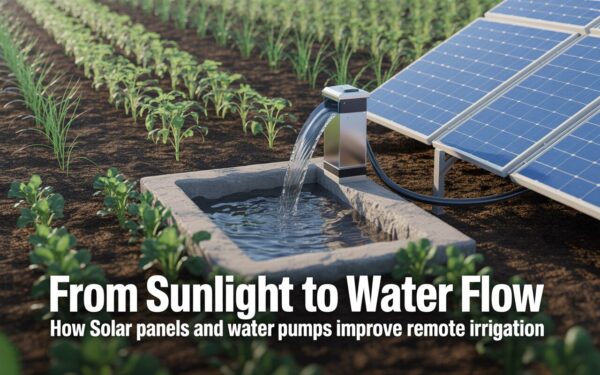
Water is essential for farming. Crops need it every day, especially in dry and remote areas. But many farms are far away from power grids. Diesel pumps are costly to run, noisy, and harmful to the environment. Grid electricity is often unreliable or not available at all.
This is where solar-powered water systems are changing everything.
By using sunlight instead of fuel or grid power, farmers can pump water in a clean, reliable, and affordable way. At the center of this solution are solar panels and photovoltaic pumping technology. Together, they turn sunlight into steady water flow for irrigation.
The Challenge of Irrigation in Remote Areas
Remote farms face many problems. Electricity may not reach them. Fuel prices can rise suddenly. Maintenance costs are often high. When water pumping depends on these systems, farming becomes risky.
Crops suffer when irrigation is delayed. Farmers lose time and money. In some cases, land cannot be used at all because water access is too difficult.
Solar-powered irrigation offers a practical solution to these challenges. It uses a free and renewable energy source: the sun.
How Solar-Powered Water Pumping Works
The process is simple and effective.
Solar panels capture sunlight and convert it into electricity. That electricity powers a pump, which moves water from wells, rivers, or storage tanks to fields. When the sun shines, the system runs. When sunlight is strong, pumping power increases.
A photovoltaic water pump system is designed specifically for this purpose. It matches solar power generation with water pumping needs. This makes it ideal for farming areas with good sunlight and limited access to electricity.
There is no need for fuel deliveries. There are fewer moving parts. Maintenance is low. Over time, this saves money and effort.
Why Photovoltaic Water Pump Systems Are So Effective
One major advantage of a photovoltaic water pump system is independence. Farmers are no longer tied to fuel prices or unstable power grids.
These systems are also scalable. A small farm can use a basic setup. Larger farms can install more panels and higher-capacity pumps. The system can grow as water needs increase.
Another key benefit is reliability. As long as there is sunlight, water can flow. This makes irrigation planning easier and more predictable.
In addition, these systems are environmentally friendly. They produce no emissions and no noise. This helps protect farmland and surrounding ecosystems.
The Role of Solar Panels in Irrigation Systems
At the heart of every solar pumping solution is the solar panel. Solar panels are responsible for collecting sunlight and turning it into usable energy.
Modern solar panels are efficient and durable. They are built to handle outdoor conditions such as heat, dust, and rain. This makes them suitable for farms and remote locations.
In irrigation systems, solar panels are often mounted on fixed frames or ground structures. They are positioned to receive maximum sunlight throughout the day.
As solar panel technology has improved, systems now produce more power with fewer panels. This reduces installation space and overall cost.
Matching Power Supply With Water Demand
One of the strengths of solar irrigation systems is how naturally they match farming needs.
When the sun is strong, crops often need more water. During cloudy periods or at night, water demand is usually lower. Solar-powered systems follow this same pattern.
Some setups include water storage tanks. During the day, water is pumped and stored. Later, gravity helps distribute water to crops. This removes the need for batteries in many cases, keeping the system simple and cost-effective.
This smart use of sunlight makes irrigation more efficient and reliable.
Cost Savings Over Time
The upfront cost of installing a photovoltaic pumping system may seem high. However, the long-term savings are significant.
There are no fuel costs. Electricity bills are eliminated. Maintenance requirements are low compared to diesel pumps.
Over time, these savings often exceed the initial investment. For many farmers, solar pumping becomes the most affordable option after just a few years.
This financial stability allows farmers to invest more in crops, equipment, and land improvement.
Easy Installation and Low Maintenance
Modern photovoltaic water pump systems are designed for simple installation. Once installed, they require minimal supervision.
There are fewer mechanical parts compared to traditional engines. Solar panels do not wear out quickly. Pumps are designed for continuous use.
Routine checks and basic cleaning are usually enough to keep the system running smoothly for many years.
This ease of use is especially important in remote areas where technical support may be limited.
Final Thoughts
Access to water should not depend on fuel availability or unstable power grids. Solar technology offers a cleaner and smarter solution.
By combining a reliable photovoltaic water pump system with high-quality solar panel technology, farmers can turn sunlight into steady water flow. This improves irrigation, reduces costs, and supports sustainable agriculture.
From sunlight to water flow, solar-powered pumping systems are helping remote farms grow stronger, greener, and more resilient every day.