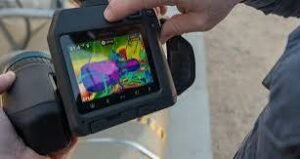
Buying an optical gas camera does not create an inspection program. Reliable results depend on trained operators, suitable survey conditions, safe access, reporting rules and a repair-verification process. That is why many asset owners use specialist partners.
Why equipment alone is not a solution
The concern in this part of the system is volatile organic compound and hydrocarbon leaks that create safety, revenue, maintenance, and reporting consequences. The immediate symptom is not always the root cause, so diagnosis needs to precede repair, replacement or system integration. That distinction protects both the budget and the asset. A narrow, testable question keeps the investigation efficient. It also helps the final report explain whether the evidence confirmed the suspected failure mode or pointed to another cause.
What qualified optical imaging teams provide
For energy producers, pipeline operators, refineries, terminals, and environmental compliance teams, accountability is as important as the technical method. A named person or team should review results, authorize follow-up and close the record. Otherwise, useful findings can remain unresolved. Operations, engineering, finance and customer teams may read the same result differently. A short decision summary supported by detailed technical evidence gives each group the information it needs.
Matching the platform to the facility
The technical options include high-end optical imaging, infrared thermography, helicopter or drone surveys, mobile laboratories, trained engineering interpretation, and targeted LDAR. Selection depends on what must be detected, located, measured or verified. A method that is excellent for screening may still need a more precise follow-up tool. Field teams should record environmental conditions and known sources of interference. Those notes allow reviewers to judge whether an apparent anomaly is credible and whether a return visit is necessary.
Inspection frequency should follow risk
Guidance on Maya Global is most useful when it states both the available methods and the limits that affect the result. Before acting on findings in this area, teams must address technology selection, operator certification, site safety, detection thresholds, environmental conditions, and defensible records. Procurement should state performance requirements, data format, qualifications and acceptance criteria. Cheap work that leaves these questions unresolved often costs more later. Site access, permits, traffic controls and operating windows can influence the method as much as sensor capability. These constraints should be settled before mobilization to avoid rushed or incomplete data collection.
What the service agreement should specify
The main constraints are technology selection, operator certification, site safety, detection thresholds, environmental conditions, and defensible records. They belong in the technical scope because they can change accuracy, safety and usability. Critical findings may require confirmation by another method or physical exposure. The report should state confidence and explain what could not be determined. Honest limits help engineers choose safe follow-up work and prevent a preliminary finding from being used for a decision it cannot support.
How results support LDAR programs
In practice, this stage requires teams to define assets and risk, choose suitable platforms, survey during appropriate conditions, classify observations, verify sources, repair priority leaks, and document closure. Asset identifiers, locations, dates and test conditions should remain attached to every finding. That creates an audit trail and reduces duplicate surveys. The workflow should define how urgent conditions are escalated and how routine observations enter planned maintenance. Separate paths prevent every result from being treated as an emergency.
Evaluating a long-term technical partner
The practical return includes efficient screening of many components, non-contact inspection, quicker diagnosis, and better targeting of labor-intensive follow-up. Some gains are direct, while others appear as avoided excavation, fewer complaints or better use of field labor. Owners should decide in advance which outcomes justify expansion. The strongest case combines a service outcome with a financial measure. For example, a faster location is more meaningful when it also reduces repair hours, disruption or the volume of lost product.
What should teams confirm before an optical imaging partnership?
They should confirm the asset type, operating condition, required accuracy and the decision the result must support. For this topic, the main constraints are technology selection, operator certification, site safety, detection thresholds, environmental conditions, and defensible records. A short pre-field review should document those limits, identify any need for a second method and set the acceptance check for the final result.
How can owners verify the value of an optical imaging partnership?
Verification starts with a baseline and a measure tied to the intended outcome. Expected gains include efficient screening of many components, non-contact inspection, quicker diagnosis, and better targeting of labor-intensive follow-up. Owners should compare conditions before and after the intervention, confirm that priority findings were closed and record any recurrence. That produces a direct answer instead of relying on a vendor claim or an untested estimate.
Conclusion
The right technical partner supplies trained judgment and accountable follow-through. For energy producers, pipeline operators, refineries, terminals, and environmental compliance teams, the next step is to define the decision, choose evidence that can support it and assign responsibility for follow-up. That approach keeps the work factual, measurable and useful after the initial survey or installation.