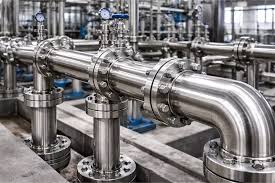
Industrial piping systems are essential to many business operations. From manufacturing plants to oil refineries, power stations, water treatment facilities, and chemical processing lines, these systems must move fluids, gases, steam, and other materials safely and efficiently. Metal flanges play a key role in keeping these systems stable, serviceable, and reliable.
What Are Metal Flanges?
Mechanical parts called metal flanges are used to join pipes, valves, pumps, pressure vessels, and other apparatus. Instead of creating a permanent welded joint between every section, flanges allow different parts of a piping system to be bolted together. A gasket is usually placed between two flange faces to create a secure seal and prevent leakage.
Carbon steel, stainless steel, alloy steel, and other metals chosen according on temperature, pressure, corrosion resistance, and operating environment are common flange materials. Businesses may employ weld neck flanges, slip-on flanges, blind flanges, threaded flanges, socket weld flanges, or lap joint flanges, depending on the application.
Improving System Strength and Stability
One of the main reasons metal flanges are widely used in industrial piping is their strength. High pressure, high temperatures, vibration, and constant loads are common operating conditions for industrial systems. A weak connection can lead to leakage, downtime, safety risks, or expensive repairs.
Metal flanges provide a strong connection point between different system components. When properly designed, machined, and installed, they help maintain alignment and structural integrity throughout the piping network. This is particularly crucial in sectors of the economy where production can be disrupted or dangerous situations can arise due to system failure.
Supporting Easy Maintenance and Inspection
For businesses, maintenance efficiency directly affects operating costs. Piping systems require regular inspection, cleaning, part replacement, and testing. If every connection were permanent, maintenance would become more difficult and time-consuming.
Metal flanges make piping systems easier to disassemble and reassemble. Workers can remove a valve, pump, filter, or pipe section without cutting the entire line. This reduces maintenance time and helps businesses restart operations faster.This flexibility is a huge benefit in businesses where downtime results in lost income
Flanged connections also allow technicians to inspect internal components more conveniently. For example, in chemical plants or water treatment systems, certain sections may need to be opened regularly to check for corrosion, deposits, or wear. Flanges make this process more practical.
Enhancing Safety in Industrial Operations
Any company that uses hazardous or pressurized plumbing systems must prioritize safety. Leaks can cause equipment damage, environmental problems, product loss, or risks to workers. Reliable metal flanges help reduce these risks by creating secure, pressure-resistant connections.
The sealing performance of a flange depends on several factors, including material quality, surface finish, gasket selection, bolt tightening, and installation accuracy. When all these elements are properly controlled, flanges can help maintain safe operation even in demanding environments.
For businesses working with steam, gas, chemicals, oil, or high-temperature fluids, choosing the correct flange type is not only a technical decision but also a safety requirement.
Adapting to Different Business Applications
Different industries require different piping solutions. Metal flanges are valuable because they can be adapted to many business applications. In oil and gas projects, they are used in pipelines, storage systems, and refining equipment. In power plants, they connect steam lines, cooling water systems, and pressure equipment. Stainless steel flanges provide corrosion-resistant and hygienic pipe systems in food processing and pharmaceutical manufacturing.
Construction, shipbuilding, mining, HVAC, wastewater treatment, and machinery manufacturing businesses also rely on metal flanges for dependable pipe connections. Their versatility allows companies to design systems that match specific flow rates, pressure levels, temperatures, and installation requirements.
Reducing Long-Term Operating Costs
Although flange quality may seem like a small detail in a large industrial project, it can strongly influence long-term cost performance. Poor-quality flanges may cause leakage, misalignment, frequent gasket failure, or premature corrosion. These problems can increase maintenance expenses and disrupt business operations.
High-quality metal flanges help reduce the need for repeated repairs. They also improve system reliability, which means fewer unexpected shutdowns. For businesses managing large-scale production or infrastructure projects, reliable piping connections can contribute to better productivity and lower lifecycle costs.
Working with an experienced mechanical parts supplier can help businesses source metal flanges that meet project specifications, industry standards, and performance requirements.
Helping Businesses Build Scalable Piping Systems
As businesses grow, their piping systems may need to expand or change. Flanged connections make system modification easier. New equipment can be added, old sections can be replaced, and layouts can be adjusted with less disruption.
This scalability is important for factories, processing plants, and industrial facilities that may upgrade production lines or increase capacity over time. Instead of rebuilding an entire piping network, businesses can modify key sections through flanged connections.
Conclusion
Metal flanges are more than simple pipe connectors. In industrial pipe systems, they promote long-term dependability, flexibility, strength, safety, and effective maintenance. For businesses that depend on continuous operation, the right flanges can help prevent leakage, reduce downtime, simplify maintenance, and improve system performance.
By selecting suitable flange types, materials, pressure ratings, and sealing solutions, companies can build piping systems that are safer, more durable, and better prepared for future growth.